
A Cool and Immediate Lesson in Supply and Demand by Durian Fruit

Yesterday, I’m suddenly alerted to the fact that all Thais throughout the country are clamoring for durian fruit (AKA “King of Fruits”).
Now, I’m very well aware that nearly all Asians love durian. It’s a very peculiar and special fruit. For one, it stinks like shit. I can recall visiting Singapore in the late 80s, checking into a hotel, and seeing a sign with a pic of the fruit with a red circle and a line through it, signifying NO. To make it explicit: “NO DURIAN.”
The odor permeates.
(In a past life I bought some of my favorite pungent French cheeses, like Blue, Roblechon, and Muenster, before boarding a flight from Charles De Gaulle, bound for San Francisco. When we landed in Boston for the first leg and the overhead bins were open, the cabin filled with the awareness that someone had shit their pants. Before long, I realized I was the culprit. Durian is like that.)
Yesterday, I got a DM from a very nice gal I’ve known for 19 months or so. Never done me wrong. Good mother of a young son.
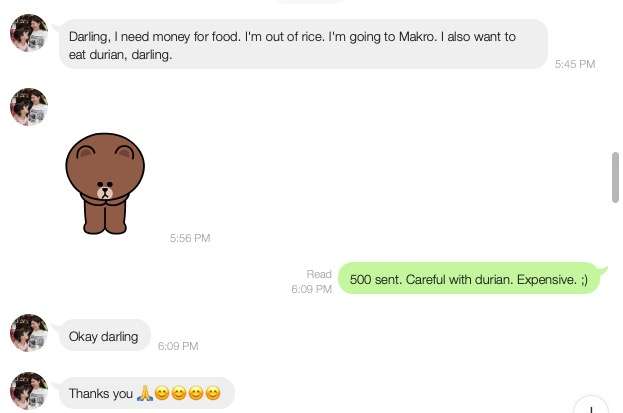
500 baht is about 15 or 16 bucks US. Makro is Costco (seriously…Costco is a carbon copy…yes, Makro predates it…a Dutch company). Also, in Thailand, you can send money on your phone like handing someone cash. No “pending; 3-5 days processing.”
But buying durian threw me for a loop because it’s typically very expensive, and Sumitra is hyper-frugal. Raised by a man, not a woman, she has disciplined man skills, like being meticulous with money. When I send her a little money, she dutifully sends back pics of a shopping cart with whole food and a pic of the receipt. I’m never getting back pics of her at the nail or hair salon.
The plot thickens….
Far gets home about 10PM or so, and what does she have in hand, way out of the blue?
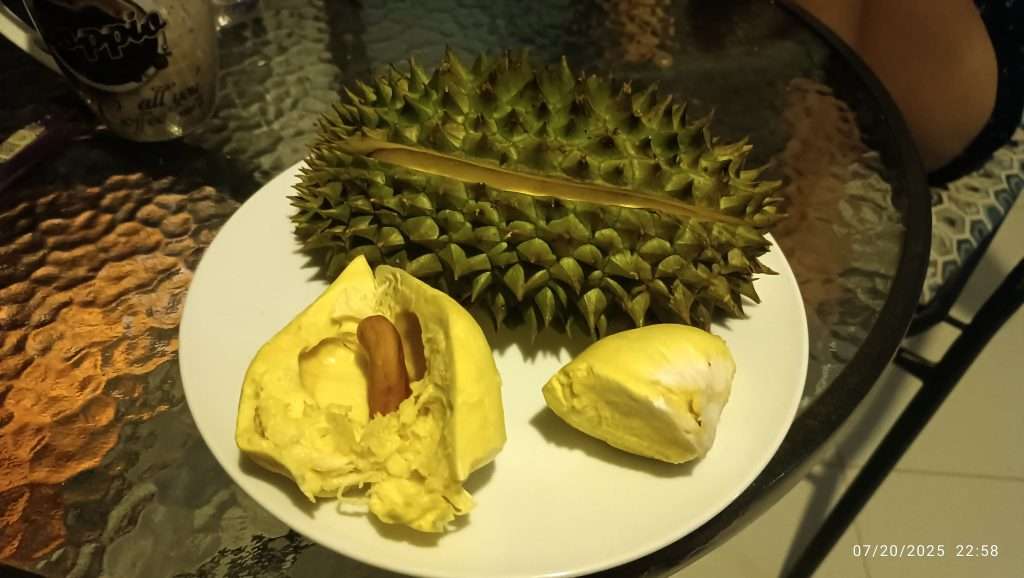
So now I for sure know something’s up. This can’t be a coincidence. This morning, Sumitra messages.

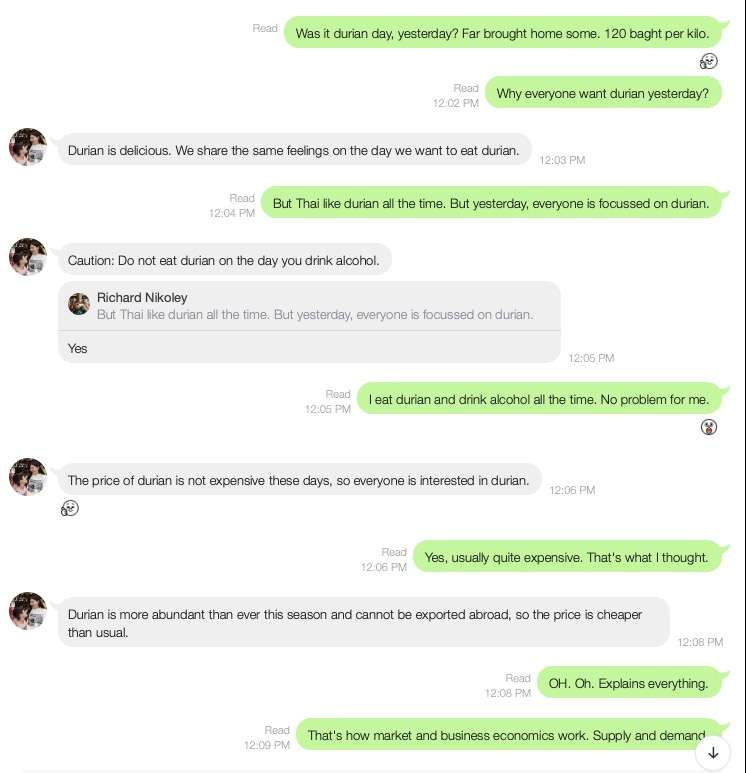
So now I’m down a rabbit hole and have to know. Incidentally, durian is expensive both because it’s in high demand and also, it requires big inputs at commercial orchard scale. People don’t really grow their own. Too much work, and there are too many other tropical fruits that are easy.
This is where it gets interesting for me because rather than Google current news, I went to Grok 4, the most intelligent AI on the planet now (available to paid members via API here).
“Since yesterday, all the Thais here are going crazy for durian. It’s usually relatively expensive because it has significant inputs (hard to do right, so usually larger orchards with economies of scale), but it’s like half price and less, like a selloff. I hear it’s because it’s a large crop this year, combined with some inability to export. What do you know, currently?”
Based on recent reports and social media discussions from Thailand, the sudden drop in durian prices you’re observing—down to around half or less of the usual rates, with some varieties selling for as low as 80-120 Thai baht per kilogram locally—appears to stem from a combination of abundant harvests this year and ongoing export challenges, particularly with China, Thailand’s largest durian market. This has led to an oversupply in the domestic market, prompting what feels like a “selloff” as growers and sellers offload excess fruit quickly to avoid spoilage.
Key Factors Driving the Price Drop
- Oversupply from a Bumper Crop: Thailand’s 2025 durian harvest has been particularly strong, with production estimates up significantly due to favorable weather conditions earlier in the year. This surge in supply was anticipated as early as March, when traders noted that prices would likely decline amid the increased volume. By June, wholesale prices had already fallen to 70-80 baht per kilogram for premium varieties like Monthong, marking a 5-year low and reflecting structural issues in agricultural production where output has outpaced demand. Similar patterns have affected related fruits like mangosteen, which hit a 10-year low of 12-14 baht per kilogram due to the same abundance.
- Export Hurdles to China: China accounts for the vast majority (over 80%) of Thailand’s durian exports, but shipments have declined by about 3% in the first half of 2025 compared to last year. Stricter Chinese regulations on chemical residues and food safety—implemented to address concerns like cadmium contamination—have led to more rejections at the border. For instance, earlier incidents in January saw batches of durian returned to Thailand, flooding local markets like Talad Thai and causing immediate price crashes. These rules have tightened further by mid-year, exacerbating the issue. Additionally, China’s own durian production has ramped up, creating competition and reducing import demand, with prices in China dropping below 8 yuan per jin (about 500 grams) by June.
- Local Market Impact and Recent Buzz: The glut has hit hardest in recent weeks, aligning with your observation of prices halving “since yesterday.” On-the-ground reports from places like Pattaya and Prachuap Khiri Khan province confirm durian selling at steep discounts—e.g., 120 baht per kilogram on July 20 (down from a typical 300 baht) and 80 baht for varieties like Bang Saphan on July 18—due to the need to clear stock quickly. Social media chatter in Thailand highlights this as a widespread phenomenon, with users noting “durian days” of special sales and linking it to the export slowdown. Efforts to stagger harvests and promote quality standards haven’t fully mitigated the domestic oversupply.
This situation isn’t isolated to durian; neighboring Vietnam has seen similar price drops in its Mekong Delta region due to reduced Chinese demand. Thai authorities, including the Department of Agriculture, are pushing for better safety compliance to revive exports, but short-term relief for consumers like you means continued low prices—potentially through the end of the main season in August or September. If you’re stocking up, note that durian’s short shelf life (2-3 days once ripe) is amplifying the urgency for these sales.
There were 12 references to online sources. I’ll spare you. It all checks out IRL.
I trust you got the simple message about supply and demand and the beautiful part that smart economists have called, for centuries, the “invisible hand of the market.”
The other lesson is, why exactly do we need news media and long-form podcasts (getting boring and repetitive by the day) anymore? Both everyday reporting by people on-scene along with video footage is all AI is going to need to piece together a much more honest picture than anyone has ever gotten from NewsCorp with its filtering advertisers.
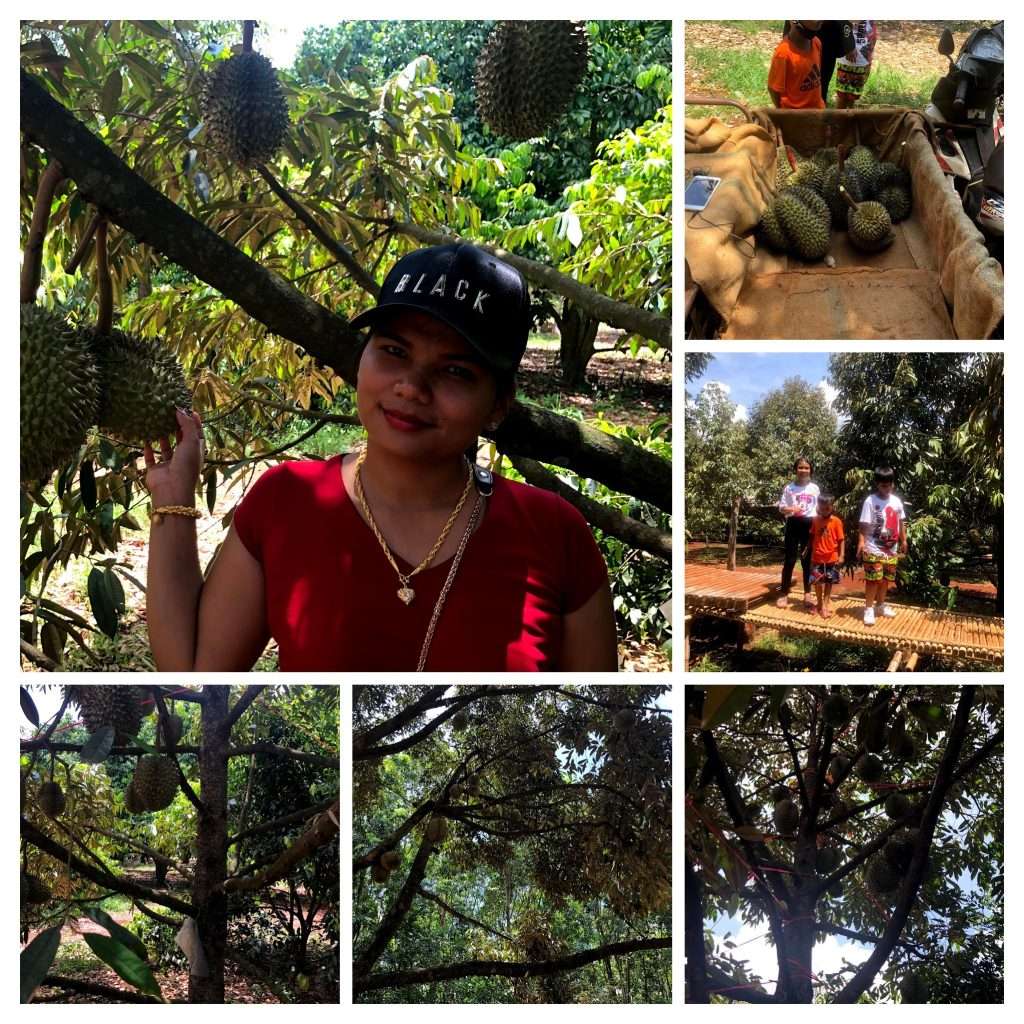
Here’s a collage of a trip to an actual durian orchard in Sisaket province.
Cheers.
… I had a post nearly queued up about my recent discoveries about alcohol consumption and how to be a sciency master at it. This thing derailed that, so I have time to tighten it up more. So, tomorrow or maybe the next day.
WHAT IT'S ABOUT AND HOW IT WORKS
Free The Animal is an eclectic writing project about everything since November 2003. 23 years, 5,500 posts, 5 million words.
It's a paid membership blog. Most posts are free and public, but only paid members can comment. What determines whether it's free or paid is when I publish. Monday through Friday, free and public. Saturday and Sunday, for paid members. That's it. Membership info here.
I recall…God, 25?? years ago, when there was a snow crab glut and Red Lobster had all you can eat crab legs. It was fucking beautiful. I ate so many servings once, the folks I was out with started hounding me to go, they were tired of sitting there watching me stuff my face. I must have had 5 or 6 huge serving brought out. I was working framing houses in Phoenix at the time, and in my 20’s, I could put down some food. I must have gone to Red Lobster 5 times the next few weeks. When it works in your favor, it’s amazing.
Ha. Great story.