
You’ve Been … Thunderstruck
A little inspiration finally

I’ve been a bit stalled lately, which isn’t exactly unprecedented, but it’s unusual for me. I haven’t been writing much because, frankly, I’ve been thunderstruck—and that’s not just the title of this post; it’s how I feel now, as a libertarian-minded dude for decades. The world has always seemed like a clusterfuck of incompetence and denial, where basic truths like one plus one equals two are ignored, where financial budgets are not just suggestions, where employees are often more of a drain than an asset to their organizations. This shit has just been getting worse and worse, and as someone who’s always fought against this tide of bullshit, you can imagine my surprise, or rather, my state of being thunderstruck.
Here I am, pinching myself daily because what I’m seeing now is nothing short of libertarian pipe dreams spewing from a fire hydrant. It’s like all those years of being a voice in the wilderness, screaming into the void about sanity, freedom, and basic economic principles…and now, suddenly, it’s happening. So, I’ve figured that not writing so much might give everyone else out there a chance to absorb it for themselves, to see how it’s playing out without my daily hot takes. Because, let’s face it, what’s there to interpret when it’s so fucking clear?
The theme of this post, as I’ve mentioned before, is Trump’s D-Day. Remember, the storming of the beaches at Normandy was just the beginning. There was a plan to follow through, to go in and finish the job of defeating Germany. We’re at our own kind of D-Day now, where the initial shock has hit, and the real work is just beginning. It’s not just about the initial shock and awe; it’s about what comes next, how we handle the aftermath, and how we keep pushing forward.
So, I’m taking a bit of a back seat, not because I’m out of the game, but because watching this unfold is its own kind of spectacle. You don’t need me to spoon-feed you the reality when it’s so starkly obvious. Take it in, ponder it, and let’s all hope that this isn’t just a fleeting moment but the beginning of something real, something enduring. Let’s make sure this isn’t just a storm, but a fucking hurricane that reshapes the landscape.
After the successful D-Day invasion on June 6, 1944, the following key events and timeline led to Germany’s defeat:
- Breakout from Normandy: The Allies faced a slow advance initially due to strong German defenses but managed a significant breakthrough with Operation Cobra in late July 1944. This allowed Allied forces to push into France, liberating Paris by August 25, 1944.
- Advance Across France: After Paris, the Allies continued their advance, facing less resistance as German forces were in disarray. By September, they had reached the German border.
- Battle of the Bulge: In December 1944, Germany launched a counteroffensive in the Ardennes, known as the Battle of the Bulge. Although initially successful, the German advance was halted, and it marked the last major offensive of the German army on the Western Front.
- Crossing the Rhine: In March 1945, the Allies crossed the Rhine River into Germany, with operations like Operation Plunder and the capture of the Ludendorff Bridge at Remagen playing significant roles.
- Final Push into Germany: The Allies advanced deep into Germany, facing fierce but increasingly uncoordinated resistance. Cities like Cologne and Bonn fell in early March, followed by others.
- Berlin and the End of the War in Europe: By April 1945, Soviet forces from the east and Western Allies from the west were closing in on Berlin. Hitler committed suicide on April 30, 1945, and on May 7, 1945, Germany unconditionally surrendered. The official end of hostilities in Europe was declared on May 8, 1945, VE Day.
From D-Day to Germany’s surrender, it took about 11 months to secure Germany’s defeat, involving intense combat, strategic maneuvers, and a significant logistical effort by the Allies.
[Credit: Grok]
Now, indulge yourself for a bit. Don’t rush this, this one time. It’s a prerequisite to the rest of the post and is important in terms of getting in the mood. Let your juices flow. Get aroused.
Maybe you have a “tin ear” for that and prefer a country or folk vibe. Here you go: Steve’n’Seagulls, a Finnish folksy band. It’s a famous cover of AC/DC’s Thunderstruck and even though I love the AC/DC rock & fuck-you version the best, I adore this and have watched it a dozen times.
… It’s no secret that the so-called “humanitarian” arms of our government have been playing a deeper, more sinister game than just handing out aid. The recent moves by DOGE to delve into the murky waters of health payment systems like Medicare and Medicaid? That’s not just a dive into the swamp; it’s a full-on assault on the very heart of bureaucratic filth.
Imagine this: for decades, we’ve been living in a cultural stasis, an amber prison where nothing new, nothing innovative, really breaks through. Our entertainment, our news, even our scientific progress has been stuck, managed by powers that prefer control over creativity.
Why does everything feel like a sequel or a reboot? Because the cultural gatekeepers—let’s call them what they are: the Swamp and Woke—have been busy ensuring that the only ideas that flourish are the ones they can control. They’ve turned our culture into a museum of the past, with no new exhibits.
Look at music. We’re stuck in a loop of nostalgia, where the hits of yesteryear are repackaged and sold as the new thing. The same goes for fashion, where trends haven’t shifted since the turn of the millennium. It’s like we’re all stuck in the early 2000s, with our phones just getting more cameras instead of true innovation.
Alzheimer’s research—a massive, government-funded failure. Billions poured into chasing a single, flawed hypothesis while real progress was sidelined, all because grant whores decided what “science” should look like.
The medical field during the recent Covidiocy. Hospitals, funded predominantly by government, followed a one-size-fits-all treatment protocol for a “novel” disease. Why? Because their financial survival depended on playing by the rules set by the same bureaucratic entities that fund them. It’s not about healing; it’s about compliance and cash.
Now, with DOGE poking around, the establishment is scrambling. Suddenly, there’s talk of protests, of rallying against changes to these sacred institutions. But those protests are as staged as a reality TV show. They’re meant to distract from the real issue: the exposure of a system designed to keep everything, from culture to science, in a controlled, profitable stagnation.
This isn’t just about one agency or one policy. It’s about recognizing how the government has used its “help” to manipulate, to control, to freeze us all in place. The fight now is to break free from this bureaucratic amber, to let real human creativity and scientific progress breathe again.
We’re at a turning point. If we can push through, if we can expose and dismantle this control, we might just see the dawn of a new golden era—one where innovation isn’t just a word, but a reality.
… I haven’t really seen this liked and shared all over the place, which is like catnip for me. I consider, with good reason, that the vast majority of humans are fucking stupid and lazy, irredeemable. But I always hope for and celebrate redemption.
Here’s one of the “teenagers and young men” of DOGE who tore it all down in hours, in his own words. You can also read it on X. It’s not a super popular post, given its monumental message, import, and honesty. That’s because most humans are fucking worthless, and it takes legions to budge them in any way from preferring to slime up to the trough of entitlement.
It’s a thriller.
But their traditional defenses crumbled against DOGE’s new playbook. While bureaucrats drafted memos about “proper procedures,” the young coders were already mapping payment flows. While senators scheduled hearings, pre-positioned personnel were implementing new transparency protocols. While media allies prepared hit pieces, DOGE’s algorithms exposed decades of questionable transactions.
The scale was breathtaking:
EPA climate initiatives? Not just mapped—found unauthorized programs in 47 states. Education’s DEI maze? Not just exposed—revealed coordination across 1,200 programs. Intelligence community black budgets? Not just traced—uncovered patterns hidden for 30 years.
“The administrative state runs on two things,” a senior advisor explained, watching patterns emerge across DOGE’s screens. “Control of information and money flows.” His eyes tracked new connections forming in real-time. “We’re not just exposing their networks—we’re rewriting their DNA.”
The cracks began showing in unexpected places. A career EPA director, tears streaming: “Everything we built…” A USAID veteran, hands shaking: “They’re inside all of it…” A Treasury lifer, closing his office: “They move faster than we can think.”
Across Washington, officials who had weathered every reform since Reagan began quietly updating LinkedIn profiles. A Deputy Director: “Open to opportunities.” An Agency Chief: “Exploring new challenges.” A Bureau Head: “Time for change.”
DOGE’s algorithms weren’t just programs—they were archaeology tools, excavating decades of buried networks. Each data point connected to another. Each discovery revealed new targets. Each pattern exposed larger systems.
“It’s beautiful,” one of the coders whispered, watching connections form across his screen. “Like watching a galaxy map itself.”
For the permanent bureaucracy, this wasn’t just change. It was an extinction-level event. Their power came from controlling who got paid, when they got paid, and what they got paid for. Now those controls were evaporating like dawn burning away darkness.
And now you’ll want to get thrilled…
OVERRIDE: INSIDE THE REVOLUTION REWIRING AMERICAN POWER
The clock struck 2 AM on Jan 21, 2025.

In Treasury’s basement, fluorescent lights hummed above four young coders. Their screens cast blue light across government-issue desks, illuminating energy drink cans and agency badges. As their algorithms crawled through decades of payment data, one number kept growing: $17 billion in redundant programs. And counting.
“We’re in,” Akash Bobba messaged the team. “All of it.”
Edward Coristine’s code had already mapped three subsystems. Luke Farritor’s algorithms were tracing payment flows across agencies. Ethan Shaotran’s analysis revealed patterns that career officials didn’t even know existed. By dawn, they would understand more about Treasury’s operations than people who had worked there for decades.
This wasn’t a hack. This wasn’t a breach. This was authorized disruption.
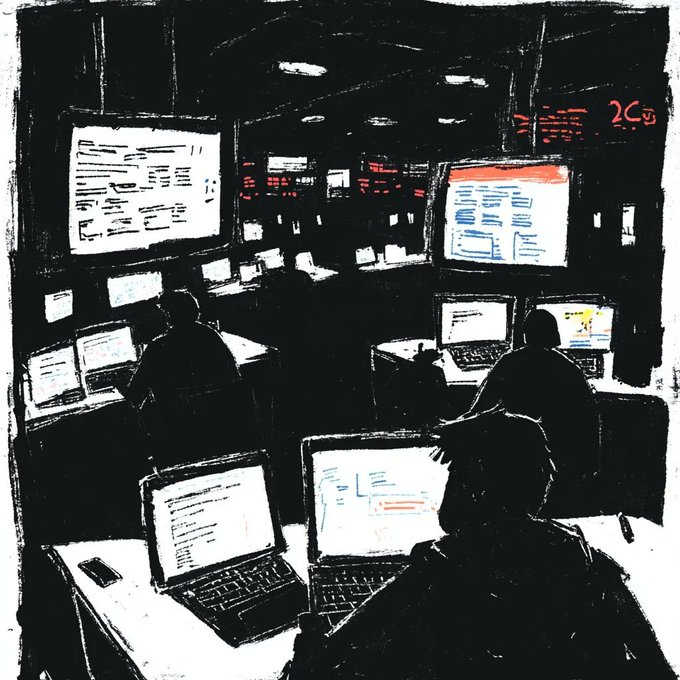
While career bureaucrats prepared orientation packets and welcome memos, DOGE’s team was already deep inside the payment systems. No committees. No approvals. No red tape. Just four coders with unprecedented access and algorithms ready to run.
“The beautiful thing about payment systems,” noted a transition official watching their screens, “is that they don’t lie. You can spin policy all day long, but money leaves a trail.”
That trail led to staggering discoveries. Programs marked as independent revealed coordinated funding streams. Grants labeled as humanitarian aid showed curious detours through complex networks. Black budgets once shrouded in secrecy began to unravel under algorithmic scrutiny.
By 6 AM, Treasury’s career officials began arriving for work. They found systems they thought impenetrable already mapped. Networks they believed hidden already exposed. Power structures built over decades revealed in hours.
Their traditional defenses—slow-walking decisions, leaking damaging stories, stonewalling requests—proved useless against an opponent moving faster than their systems could react. By the time they drafted their first memo objecting to this breach, three more systems had already been mapped.
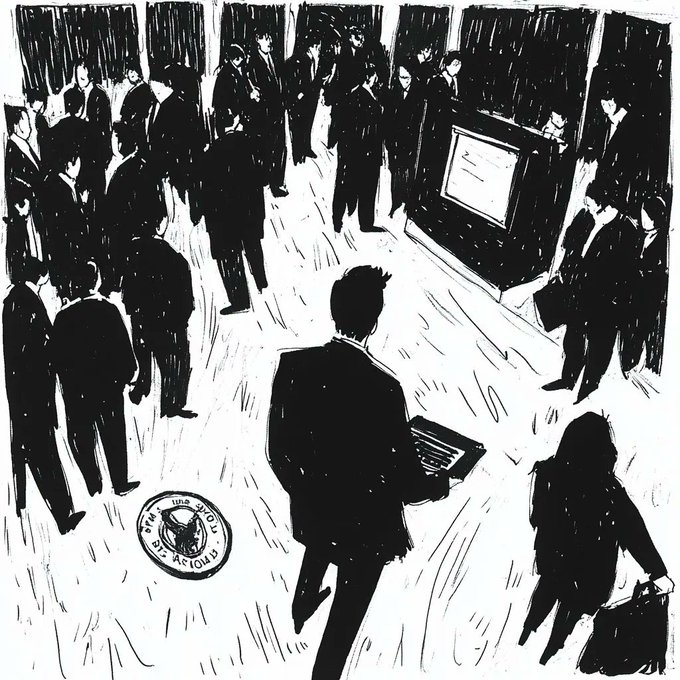
“Pull this thread,” a senior official warned, watching patterns emerge across DOGE’s screens, “and the whole sweater unravels.”
He wasn’t wrong. But he misunderstood something crucial: That was exactly the point.
This wasn’t just another transition. This wasn’t just another reform effort. This was the start of something unprecedented: a revolution powered by preparation, presidential will, and technological precision.
The storm had arrived. And Treasury was just the beginning.
THE FOUNDATION
“Personnel is policy.”
For decades, this principle, articulated by conservative strategist Troup Hemenway, remained more theory than practice. Previous administrations spent months, even years, trying to staff key positions. Trump’s first term saw barely 100 political appointees confirmed by February 2017.
Every delay meant another victory for the permanent bureaucracy.
But this time was different.
While media focused on campaign rallies and political theater, a quiet army was being assembled. In offices across DC, veteran strategists mapped the administrative state’s pressure points. Think tanks developed action plans for every agency. Policy institutes trained rapid deployment teams. Former appointees shared battlefield intelligence from previous administrations’ failures.
By Inauguration Day, over 1,000 pre-vetted personnel stood ready—each armed with clear objectives, mapped legal authorities, and direct lines to support networks. This wasn’t just staffing; it was a battle plan decades in the making.
“This is the new normal,” Vice President JD Vance declared from his West Wing office, studying real-time data flows across agency systems. “He’s having the time of his life,” he added, referring to the President’s relentless drive. “We’ve done more in two weeks than others did in years.”

The secret wasn’t just speed—it was precision. Instead of waiting for Senate confirmations, the transition team prioritized non-Senate-confirmed positions. While Democrats prepared for traditional confirmation battles over cabinet posts, an army of aligned personnel was already moving into place. Strategic positions were identified. Legal authorities were mapped. Support networks were established.
“We don’t have a lot of time,” the President reminded his team daily. “Four years is a lot of time in political life but it’s not a long time in real life.”
This urgency drove innovation. When DOGE’s young coders breached Treasury’s payment systems, pre-positioned legal teams neutralized resistance within hours. When career officials tried revoking system access, they discovered DOGE’s authority came from levels they couldn’t challenge. When leaks surfaced, rapid-response units fed counter-narratives to alternative media almost instantly.
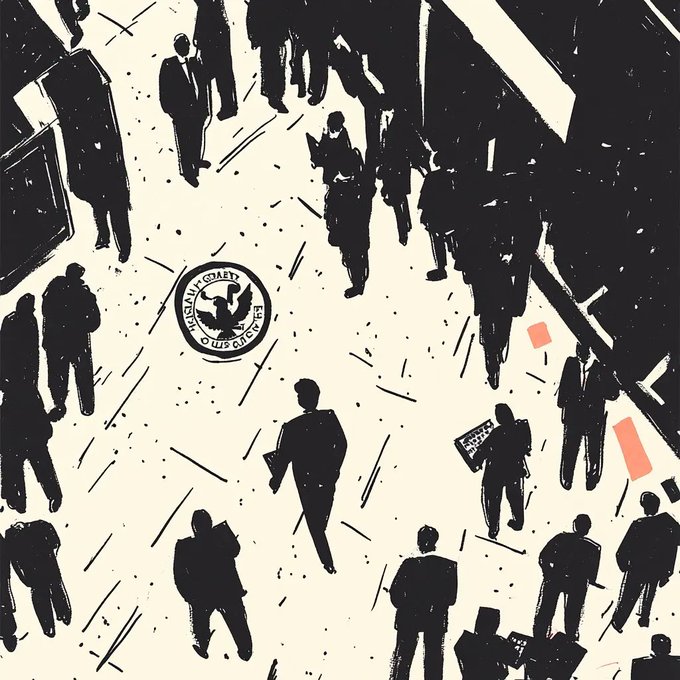
“When you look at the people surrounding the president,” Vance noted, “we’re trying to make it sort of easy for him to do what he wants to do in government. When you have the entire team firing on all cylinders you can get a lot done.”
The permanent bureaucracy never saw it coming. They were prepared for resistance. They were ready for protests. They had plans for leaks and legal challenges. But they had no defense against an opponent who had spent years preparing for this moment.
This wasn’t just about filling seats—it was about building a machine designed to transform American governance. Every position mattered. Every appointment carried weight. And behind it all stood a president counting down not years or months, but weeks and days, driving his team forward with relentless energy.
The foundation was set. And the revolution was just beginning.
THE SPREAD
USAID fell next. No midnight raids this time. No secret algorithms. Just a simple memo on agency letterhead: “Pursuant to Executive Authority…”
Career officials panicked—and for good reason. Created by Executive Order in 1961, USAID could be dissolved with a single presidential signature. No congressional approval needed. No court challenges possible. Just one pen stroke, and six decades of carefully constructed financial networks would face sunlight.
“Pull this thread,” a senior official warned, watching DOGE’s algorithms crawl through USAID’s databases, “and a lot of sweaters start unraveling.”
The resistance was immediate—and telling. Career officials who had barely blinked at Treasury’s exposure now worked through weekends to block DOGE’s access. Democratic senators who had ignored other moves suddenly demanded emergency hearings. Former USAID officials flooded media outlets with warnings about “institutional knowledge loss” and “diplomatic catastrophe.”
But their traditional defenses crumbled against DOGE’s new playbook. While bureaucrats drafted memos about “proper procedures,” the young coders were already mapping payment flows. While senators scheduled hearings, pre-positioned personnel were implementing new transparency protocols. While media allies prepared hit pieces, DOGE’s algorithms exposed decades of questionable transactions.

The scale was breathtaking:
EPA climate initiatives? Not just mapped—found unauthorized programs in 47 states. Education’s DEI maze? Not just exposed—revealed coordination across 1,200 programs. Intelligence community black budgets? Not just traced—uncovered patterns hidden for 30 years.
“The administrative state runs on two things,” a senior advisor explained, watching patterns emerge across DOGE’s screens. “Control of information and money flows.” His eyes tracked new connections forming in real-time. “We’re not just exposing their networks—we’re rewriting their DNA.”
The cracks began showing in unexpected places. A career EPA director, tears streaming: “Everything we built…” A USAID veteran, hands shaking: “They’re inside all of it…” A Treasury lifer, closing his office: “They move faster than we can think.”

Across Washington, officials who had weathered every reform since Reagan began quietly updating LinkedIn profiles. A Deputy Director: “Open to opportunities.” An Agency Chief: “Exploring new challenges.” A Bureau Head: “Time for change.”
DOGE’s algorithms weren’t just programs—they were archaeology tools, excavating decades of buried networks. Each data point connected to another. Each discovery revealed new targets. Each pattern exposed larger systems.
“It’s beautiful,” one of the coders whispered, watching connections form across his screen. “Like watching a galaxy map itself.”
For the permanent bureaucracy, this wasn’t just change. It was an extinction-level event. Their power came from controlling who got paid, when they got paid, and what they got paid for. Now those controls were evaporating like dawn burning away darkness.
The pattern was devastating in its simplicity:
- Map the money flows
- Deploy aligned personnel
- Expose the networks
- Restructure the systems
By the time bureaucrats drafted objections to one breach, three more had already occurred.
The revolution wasn’t just spreading. It was accelerating.

THE IMPACT
The first bulldozer arrived in Springfield, Ohio at 6 AM on a Tuesday. By noon, three blocks of notorious potholes were filled. Local news crews arrived to find not just construction crews, but data analysts with laptops, mapping every dollar spent against real-time progress.
This wasn’t just road repair. This was revolution in action.
A woman grabbed the analyst’s arm, tears in her eyes. “Twelve years,” she whispered. “Twelve years I’ve been calling about these potholes.” He turned his laptop, showing real-time data flows. “Look,” he said. “Your tax dollars. Actually working.”
She stared at the screen. “My God,” she whispered. “It’s really happening.”
Across America, funds once lost in administrative mazes suddenly found their way to actual problems needing solutions. In rural Tennessee, broadband expansion projects long buried under bureaucratic red tape broke ground overnight. In Michigan, water treatment plants received upgrades that bureaucrats had studied for decades but never approved.
The transformation was measurable. In just two weeks:
- Tens of thousands of redundant programs identified
- Billions in waste exposed
- Hundreds of unauthorized initiatives halted
- Countless local projects unleashed
But the real metric? Trust in government rising for the first time in 50 years.

The revolution spread with surgical precision:
- Real-time tracking replaced quarterly reports
- Algorithmic oversight replaced review boards
- Local solutions replaced federal mandates
- Results replaced process
“He’s done more in two weeks than Biden did in four years and Obama did in eight,” Vance noted from his West Wing office. “But this isn’t just about speed. This isn’t just about tech. This isn’t just about personnel. It’s all three, perfectly aligned.”
For ordinary Americans, the impact was undeniable. Roads repaired. Schools revitalized. Water purified. But more importantly, something else was being restored: trust.
For the first time in generations, people saw their government not as an obstacle but as a tool for positive change.
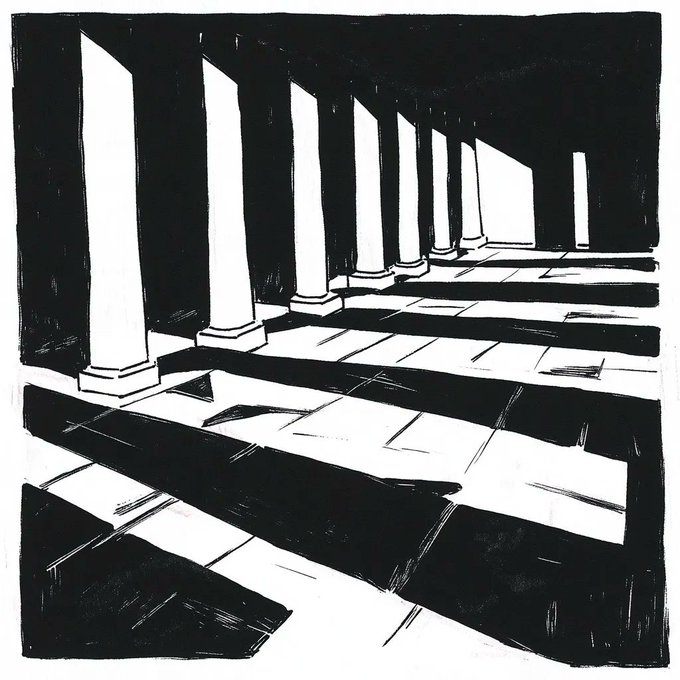
The permanent bureaucracy had long operated on a simple assumption: presidents come and go, but they remain. That assumption now lay shattered, replaced by a new reality: when preparation meets presidential determination, nothing is permanent.
“They thought we’d slow down,” Vance said, studying real-time data flows across agencies. “They thought we’d get bogged down in process. They thought we’d play by their rules.”
He smiled. “Instead, we’re just getting started.”
THE NEW DAWN
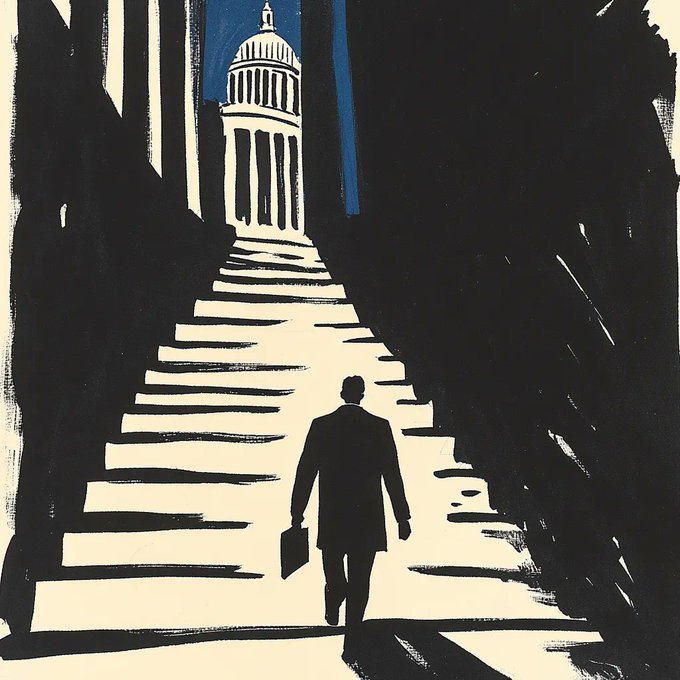
The sun rises early in Washington. On this morning, its first rays caught the classical columns of the Treasury building, casting long shadows across streets still quiet. But inside, beneath the marble and granite, screens still glowed blue. DOGE’s algorithms never sleep.
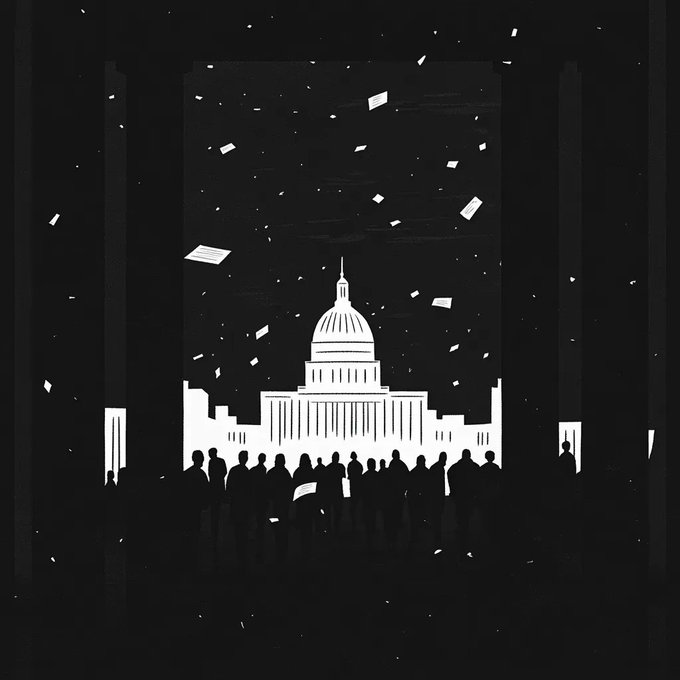
“The administrative state was built over decades,” a senior advisor explained, watching new patterns emerge across the displays. “Built to resist change. Built to outlast presidents. Built to preserve power.”
He paused, tracking a particularly interesting data flow. “But they never imagined this. They built walls against political attacks. Defenses against media exposure. Shields against congressional oversight.”
“They never prepared for algorithms that could map everything. For personnel pre-positioned everywhere. For a president who counts every week like it’s his last.”
The numbers tell the story: In Treasury—networks mapped, waste exposed, systems rewired At USAID—decades of hidden flows revealed, power structures dismantled Across agencies – redundancies eliminated, authorities realigned, missions refocused
But numbers aren’t the whole story.
Imagine, changes, coming to a community near you:
Springfield, Ohio, potholes that plagued residents for twelve years actually disappeared overnight. Rural Tennessee, where children can finally connect to high-speed internet their parents were promised decades ago. In Michigan, people truly drink clean water while bureaucrats’ memos about “studying the problem” gather dust.
This isn’t just reform. This isn’t just change. This is American governance reimagined.
“The pace is going to be the same,” Vice President Vance declared this week. “It’s just the priorities that are going to change.”
The permanent bureaucracy built their administrative state over decades, brick by bureaucratic brick. They thought it would last forever. They thought it was too big to map, too complex to understand, too entrenched to change.
They were wrong.
Four young coders with laptops proved that. One thousand pre-positioned personnel proved that. A president counting weeks proved that.
The sun continues rising over Washington. Classical columns still cast their shadows. But inside those buildings, everything has changed. The administrative state finally met its match: preparation plus presidential will plus technological precision.
This isn’t the end of the story. This is just the beginning.
The revolution isn’t just continuing. It’s becoming the new normal.
And for those who thought the D E E P S T A T E would rule forever?
They’re about to learn what happens when smart strategic minds meet determination. When preparation meets opportunity. When a new generation decides it’s time for change.
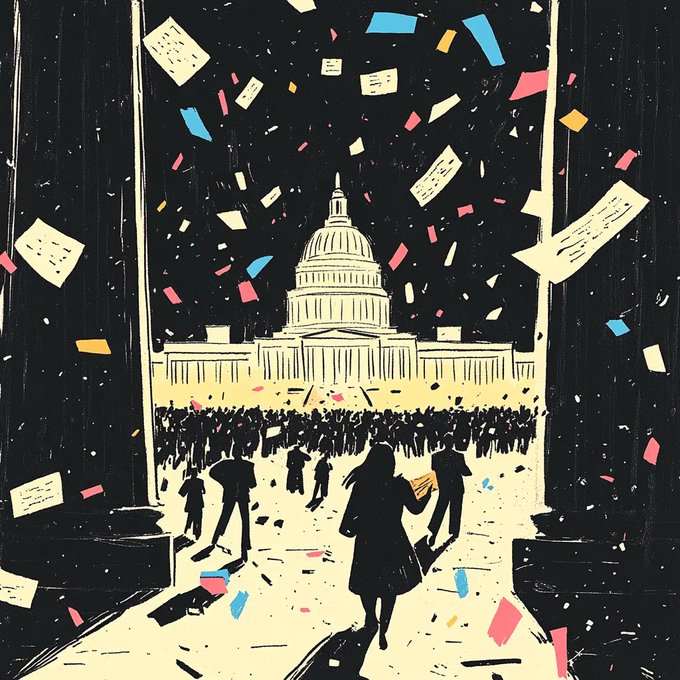
The storm isn’t just gathering. It’s here to stay.
The sun continues rising over Washington. But now, for the first time in generations, it illuminates something new:
A government that works.
A bureaucracy that serves.
A system that delivers.
The revolution isn’t just beginning.
It’s already won.
<3EKO
In over 3 decades of libertarian political endeavors online and in real life, it turned out that morality—what’s right and wrong—doesn’t get you very far. You’re really only ever preaching to the choir, and everyone else has different ideas they counter with and promote as moral codes.
But in the end, morality must rest upon the nature of reality, men, women, children, families, and village.
It turns out that in the end, you needed a new young generation who could quickly understand the code and had no investment in its legacy.
… If I have a parting thought, it’s this: there will be a million EMERGENCIES!!! from now to whenever and while mostly from the left, a significant percentage will be from the right and that will be predominately from those whose ONLY business is in keeping you riled up and enraged-engaged, from the worst (Alex Jones types) to the least bad (Tucker, et al.). For the latter, they are getting better. But they still have to make a living, so I just take them in measured doses. I suppose that applies to me as well.
I’ll continue to endeavor to give you something to chew on and ponder…not to loosen your collar.
WHAT IT'S ABOUT AND HOW IT WORKS
Free The Animal is an eclectic writing project about everything since November 2003. 23 years, 5,500 posts, 5 million words.
It's a paid membership blog. Most posts are free and public, but only paid members can comment. What determines whether it's free or paid is when I publish. Monday through Friday, free and public. Saturday and Sunday, for paid members. That's it. Membership info here.
Well, that was bracing! While I’m not quite at your level of optimism yet — left-leaning judges around the country who still hate Trump can really throw sand in the gears — what’s happening is certainly more than I expected with Trump 2.0.
Elon and the tech bros seem to be the surprise X Factor that’s dragging a baroque bureaucracy (where COBOL still reigns) into the 21st century with the help of AI and machine learning tools, and executing “full speed ahead.” Relying on executive orders that can be undone by a future president is an obvious risk, but I hope the government itself can be rebuilt at new levels of transparency and accountability before that happens. If so, Trump will be the most consequential Chief Executive since FDR.
There’s a double-edged sword to the legal challenges. This whole Blitz was obviously intricately planned out over a long time (no leaks) and calculated to win ultimately (SCOTUS), thereby solidifying the power of the executive. It’s utterly ridiculous that the POTUS can’t simply fire any fed employee who’s not elected, at will. And much other stuff to protect entrenched bureaucracy.
Thank you for sharing all this. I am not well synced into good media sources (other than FTA), so this was a breath of extra air fresh air.
My apologies for using this alternative channel but i cannot find any other way to contact you…. I am an annual member… I have been trying to run text queries on grok AI and for the last 24 hours it has been constantly displaying error messages upon every inquiry just as it did a month ago, but then it appeared fixed… Not now. Maybe you need to have one of those Musk super-stars take a look
Mattvei,
Thanks for your membership. You and all members can always feel free to contact me at rn@freetheanimal.com. Most expeditious.
I just scanned the logs and don’t see anything. As recent as a few hours ago there was plenty of interraction. I find that sometimes it helps to dump FTA cookies and go in fresh. I’m not super clear on how the AI Power plugin (the thing that manages everything in WP) uses cooking to pass prompts via OpenRouter to Grok.