
How AI Will Revolutionize This Construct of Reality
Just like I told you over 2 years ago
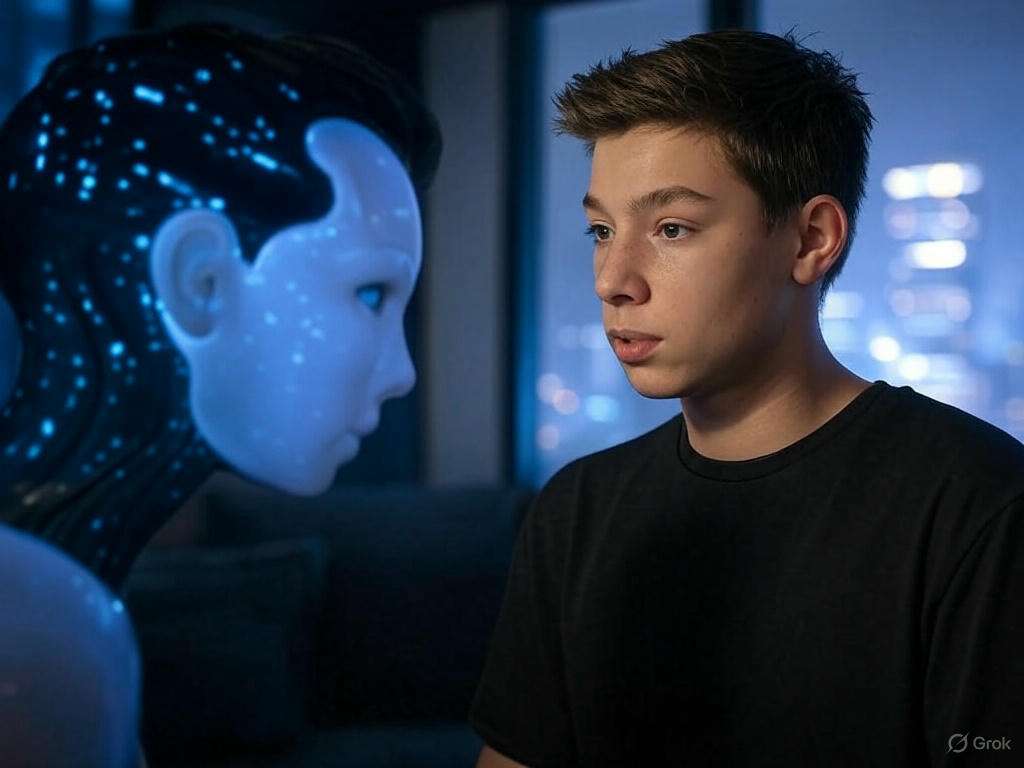
I was all set to kick off a post to be the first in my series of looking forward and remaining positive. The first one is going to be about something everyone can do right away, radically changing both the quality and quantity of information they consume. There’s just too much out there, and I’m not going to give any spoilers right now, but that post should go live tomorrow.
In the meantime, something crossed my feed today, and I just had this overwhelming feeling that I’ve got to get this out there because, well, it’s going to blow your mind. Over two years ago, AI, or artificial intelligence, became available to the general public, and in just that short span, it has advanced to where, right now, real-time conversation is coming online. You no longer have to type in a prompt, wait for a response, then ask further questions in a text conversation as you might via email, for instance. Right now, you can just get on and start talking, exactly like you would with a real person.
I’ve shown this before, but let me give you an example of that. It’s just a silly little curiosity I had about different dialects in Thailand. Here, you can spend a couple of minutes, or just a few seconds even, to see what this dynamic conversation is like.
So, here we go. This isn’t just tech babble; this is a game-changer. AI isn’t just creeping into our lives; it’s fucking sprinting, and if you’re not paying attention, you’re going to be sucking at everything. Get ready for the future because it’s kicking the door down, and it’s going to make you feel stupid and worthless unless you get your shit squared away.
And in that vein, check this out.
It’s WAY out there. I’m not going to spend time quibbling with whether there’s a real reality, since it’s a long-time topic of discussion in philosophy text going back forever, and the ultimate answer is: it doesn’t matter. All we have is perception via the senses and integration of those perceptions in the mind.
Don’t sweat it.
The issue is, how are the perceptions manipulated at the integration point?
And if coordinated manipulation is effective and widespread enough, then it creates a general narrative and millions of sub-narratives. But the bottom line is that if enough people believe and expect, then that is what they are going to experience, for reinforcement.
Essentially, the AI is explaining the workings of The Matrix to this girl. Have your mind blown.
99% of parents on this planet do not have the capacity to talk to a child or young person like that.
All the fairy tales you teach children because they were taught to you, are toast. How cool is that? AI is going to teach kids that they all have really stupid parents.
Maybe you can preempt that by getting smart?
… On a final note, I will say that the AI’s take is what’s called in philosophy, “the primacy of consciousness,” and it’s false. However, that doesn’t take away from the fact that it explained remarkably how The Matrix is the primacy of consciousness. I asked Grok to give a little synopsis.
The philosophical debate over the primacy of consciousness versus the primacy of reality centers on what is fundamentally real and causative in existence.
- Primacy of Consciousness: This view holds that consciousness (mind, perception, or thought) is primary, and reality depends on it. Idealism, exemplified by thinkers like George Berkeley, argues that “to be is to be perceived”—objects exist only as ideas in a mind, and without a perceiving consciousness, there is no reality. It suggests that the external world is shaped or created by subjective awareness.
- Primacy of Reality (or Existence): This stance, often tied to realism and objectivism (e.g., Ayn Rand), asserts that reality exists independently of consciousness. Existence comes first, and consciousness is a faculty that perceives or interacts with it. The external world has its own nature and laws, regardless of whether anyone observes or thinks about it.
The core disagreement is about causality and dependence: Does consciousness create or dictate reality (primacy of consciousness), or does reality exist as a given, with consciousness responding to it (primacy of reality)? This impacts metaphysics, epistemology, and even ethics, influencing how we understand knowledge, identity, and human action.
OK, that should about do it.
WHAT IT'S ABOUT AND HOW IT WORKS
Free The Animal is an eclectic writing project about everything since November 2003. 23 years, 5,500 posts, 5 million words.
It's a paid membership blog. Most posts are free and public, but only paid members can comment. What determines whether it's free or paid is when I publish. Monday through Friday, free and public. Saturday and Sunday, for paid members. That's it. Membership info here.
Perhaps I’m blinkered, but I’ll go so far as to agree that “a happy man sees a happy world; an angry man experiences an angry world.” In other words, one’s mindset determines one’s reality.
On the other hand, the AI’s argument goes much further than that, contending that reality is simply a construct that changes based on commonly-held beliefs. So a flat-earther would be correct if he could convince society and science to agree with him. An ancient Greek would be right about Mt. Olympus’ many gods. An Evangelical’s heaven and hell would be “real” locations. A North Korean would be right about…
I’m not arguing that we’ve reached the final, definitive version of reality, because that version is a purely materialist, even reductionist one that has to ignore consciousness, for which it has no explanation. For me, what’s interesting is the intersection and interaction of the physical and the non-physical worlds. If you treat consciousness (or programming or consensus) as the driver, with reality largely a projection from that, then you’ve lost me. I’d guess that Elon knows we went to the moon…