
Everyone Is Wrong About Transgenderism In The West; Here’s How Simple and Why
Why Western Transgenderism Is a Load of Bullshit: Lessons from Southeast Asia
The short answer for why transgenderism in the Western world is completely wrong and off base? Look to a different part of the world where this shit has always been a natural part of life.
Long before there were any technologies for sex change operations and all that modern medical fuckery, there was a place where genetic males simply had a preference to dress up as and act like females. It goes back a long, long time—hundreds of years—so maybe there’s some genetic element to it, who the hell knows? But if you read the history or you know it, these were certain types of males who were feminine as fuck, but that’s not all.
These males had to be tall compared to females; if they’re towering over the women while matching or exceeding the stature of other males, and they’ve got these very fine, delicate features, they just decide they want to live like pretty women. And because of that stature and everything else, they could actually excel at it—outdoing real women in being pretty and desirable. This has been going on for centuries, no exaggeration.
The first writings about folks like this come from the area that’s now Cambodia, in the Khmer temples—those ancient Angkor complexes—and it’s tied to Buddhist traditions too. From there, it spread to Thailand and beyond, so you’ve got mostly Thailand, Laos, and Cambodia with a history going back 700 to 800 years where it’s documented. These are androgynous males who are tall, who wish to live their lives as pretty, sexy women. In modern times, many of them end up in the sex trade, and everyone knows about it—hell, it’s practically a tourist draw. But here’s the big fucking thing about it: It has never been illegal. Never been political. It’s just is what it is, without all the Western hysteria and agenda-pushing bullshit.
And guess what. They all know their place and because of that, everyone is fine with it, hundreds of years and counting.
Ladyboys are lovely and welcome. But stay in your lane. Service industries (shops, hospitality, servers, etc.). They excel in all that; I love them to death. Bring them into politics and power, destroy your civilization.
Here’s a breakdown from Grok.
The term “ladyboys” (often more formally referred to as kathoey in Thai contexts or similar third-gender identities like warias in Indonesia or bakla in the Philippines) describes transgender women, effeminate gay men, or non-binary individuals who embody fluid gender expressions in Southeast Asian cultures. These figures have deep roots in the region’s pre-colonial societies, blending animist, Hindu-Buddhist, and indigenous beliefs that often recognized more than two genders—long before Western concepts of gender identity gained traction.
Your recollection is spot-on regarding the earliest written historical record of such individuals in Cambodia during the Khmer Empire: It comes from the Chinese diplomat Zhou Daguan (also spelled Chou Ta-k’ouan), who visited Angkor (the capital of the Khmer Empire, home to temples like Angkor Wat) in 1296–1297 CE as part of a Yuan Dynasty envoy. In his memoir A Record of Cambodia (The Customs of Cambodia), Zhou described encountering “androgynous” or “effeminate” men who dressed and behaved as women, often engaging in sex work near markets to solicit gifts from foreigners like himself. He referred to them derogatorily as “catamites” (a term for passive male lovers) and noted their prevalence in Khmer society, observing that they “paint their faces and use powder” while “walking with a mincing gait.” This account provides the first eyewitness documentation of third-gender expressions in the Khmer world, portraying them as socially visible and integrated, if marginalized.
While Zhou’s observations date to the tail end of the Angkor period (roughly 802–1431 CE), evidence suggests these gender expressions likely existed centuries earlier, though without direct written records. Khmer art and inscriptions from the 9th–12th centuries emphasize binary gender roles—often highlighting powerful women in matrilineal politics and divine cults (e.g., goddesses like Durga or apsaras dancers)—but lack explicit depictions of transgender figures. However, regional myths from the Khmer-influenced Mon and Tai cultures (dating back to at least the 11th–13th centuries in what’s now northern Thailand and Cambodia) include third-gender or hermaphroditic characters in creation stories, such as the jealous napumsaka (neuter/hermaphrodite) in the Yuan and Mon cosmogonies. These tales, preserved in Pali and Mon scripts, reflect pre-Buddhist animist ideas of multiple sexes emerging from elemental forces, hinting at cultural acceptance of gender fluidity as far back as the Khmer Empire’s rise.
In broader Southeast Asian history, similar third-gender roles appear in Hindu-Buddhist epics adapted locally (e.g., the Ramayana or Mahabharata, imported via Indian trade from the 1st century CE onward), where figures like Hijra-like envoys or divine androgynes symbolize liminal power. But the Khmer context via Zhou Daguan remains the most concrete early anchor—about 700–800 years ago—before colonial eras suppressed or reframed these identities. Today, they endure in festivals, shadow puppetry, and urban nightlife across Thailand, Cambodia, and beyond, as a testament to that ancient resilience.
Now to the practical.
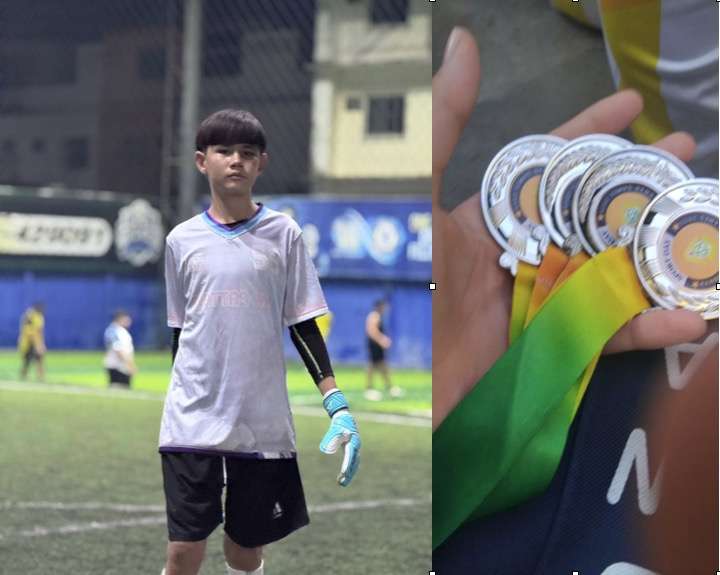
That’s Timmy. My long time GF’s son. Just turned 15, he’s half anglo, which is to say, English. He dominates in sports.
I had him over to sleep on the sofa a few nights ago.

I aim to make him into a fuck you, ball’s ass American-Style male who would prefer delighting in slitting throats than put up with bullshit.
Here’s the punchline.
He came in 2nd in 6 sporting competitions. Another guy came in first in all six.
A ladyboy.
Here’s the rub. The dude is tall, strong, but he’s up against an outlier ladyboy.
But not really. Thai school systems are all still sane.
You want to be a ladyboy when you grow up? Up to you.
But until you finish school, you are a boy, you dress like a boy, and you have a haircut like a boy.
I live in a country that gets it 100% right.
WHAT IT'S ABOUT AND HOW IT WORKS
Free The Animal is an eclectic writing project about everything since November 2003. 23 years, 5,500 posts, 5 million words.
It's a paid membership blog. Most posts are free and public, but only paid members can comment. What determines whether it's free or paid is when I publish. Monday through Friday, free and public. Saturday and Sunday, for paid members. That's it. Membership info here.